
Cyprus Travel Guide 2026
If you’re planning a getaway to Cyprus or even considering making this sunny island your home, our Cyprus Travel Guide 2026 has you covered. Cyprus offers an incredible mix of experiences – from clear blue Mediterranean waters and golden beaches to pine-clad mountains, picturesque villages, and vibrant city life. In this guide, we’ll explore the best beaches, charming rural villages, and even the Troodos mountain adventures that await you in Cyprus. Whether you’re a tourist seeking adventure or a potential investor eyeing a Mediterranean lifestyle, Cyprus has something special in store.
Cyprus Travel Guide: Beaches
With its extensive coastline, Cyprus is beach lover’s paradise. No matter where you roam on the island, a beautiful shore is never far away. Below, we highlight some of the most popular beaches across different regions of Cyprus, each offering its own unique charm.
Beaches in Larnaca
Larnaca, on the island’s southern coast, boasts some of Cyprus’s most accessible and lively beaches. Finikoudes Beach is the famous main city beach in Larnaca, a 600-meter stretch lined with palm trees along a bustling seafront promenade. Thanks to its central location, Finikoudes offers every convenience – from family-friendly shallow waters to plenty of restaurants, cafés, and shops just steps away. It’s one of the most well-known beaches in Cyprus, beloved by locals and visitors alike for its calm sea and vibrant atmosphere day and night.
Related: Best Things to do at Finikoudes: 2025 Essential Guide
Just south of the city center lies Mackenzie Beach (often spelled Makenzy), another hotspot in Larnaca. Mackenzie Beach is known for its golden sand, clear waters, and unique attraction: it doubles as a plane-spotter’s dream! Being near the airport, you can watch airplanes soar low over the water as they land – a thrilling sight right from your sunbed. By day, Mackenzie is relaxed and great for swimming; by night, it transforms into a trendy strip of beach bars, music, and restaurants, giving it a vibrant nightlife scene. From quiet morning coffees to lively DJ nights, this beach offers the best of both worlds.
Related: What to Do in Larnaca Today: 1 Perfect Day Plan
Beaches in Limassol
Heading west toward Limassol, you’ll encounter Petra tou Romiou, also known as Aphrodite’s Rock. While not exactly in Limassol city (it’s located on the coastal road between Limassol and Paphos), no Cyprus travel guide would be complete without mentioning this iconic beach. Petra tou Romiou is a stunning rocky beach with dramatic sea stacks, famed in mythology as the birthplace of Aphrodite, the Greek goddess of love. According to legend, Aphrodite rose from the sea foam at this very spot, and today couples and travelers flock here for the romantic lore and breathtaking views. The combination of the area’s natural beauty and its mythological significance makes Aphrodite’s Rock a must-see destination in Cyprus. While the beach itself is pebbly and the waters can be rough (swimming is not always recommended), the magical ambiance and photo opportunities are well worth a stop. Don’t forget to take in the sunset here – it’s truly unforgettable.
Beaches in Paphos
In the Paphos region, Coral Bay stands out as a favorite. Located a short drive north of Paphos town, Coral Bay is famous for its pristine stretch of soft, golden sand and clear, shallow waters. This Blue Flag beach is ideal for sun-seekers and families – the calm sea is perfect for swimming and paddling, and the beach offers plenty of space to lay your towel and relax. Coral Bay is also well-equipped with sunbeds, umbrellas, and beachfront cafés, so you can easily spend a full day here. Beyond sunbathing, the surrounding area of Coral Bay provides more to explore: nearby sea caves and impressive rock formations dot the coastline, offering a mesmerizing geological spectacle for nature lovers. You might take a short walk or boat trip to view the sea caves and even spot the famous Edro III shipwreck just up the coast – perfect for those looking to mix beach time with a bit of adventure. With its blend of natural beauty and amenities, Coral Bay captures the essence of a relaxing Mediterranean holiday.
Beaches in Ayia Napa & Protaras
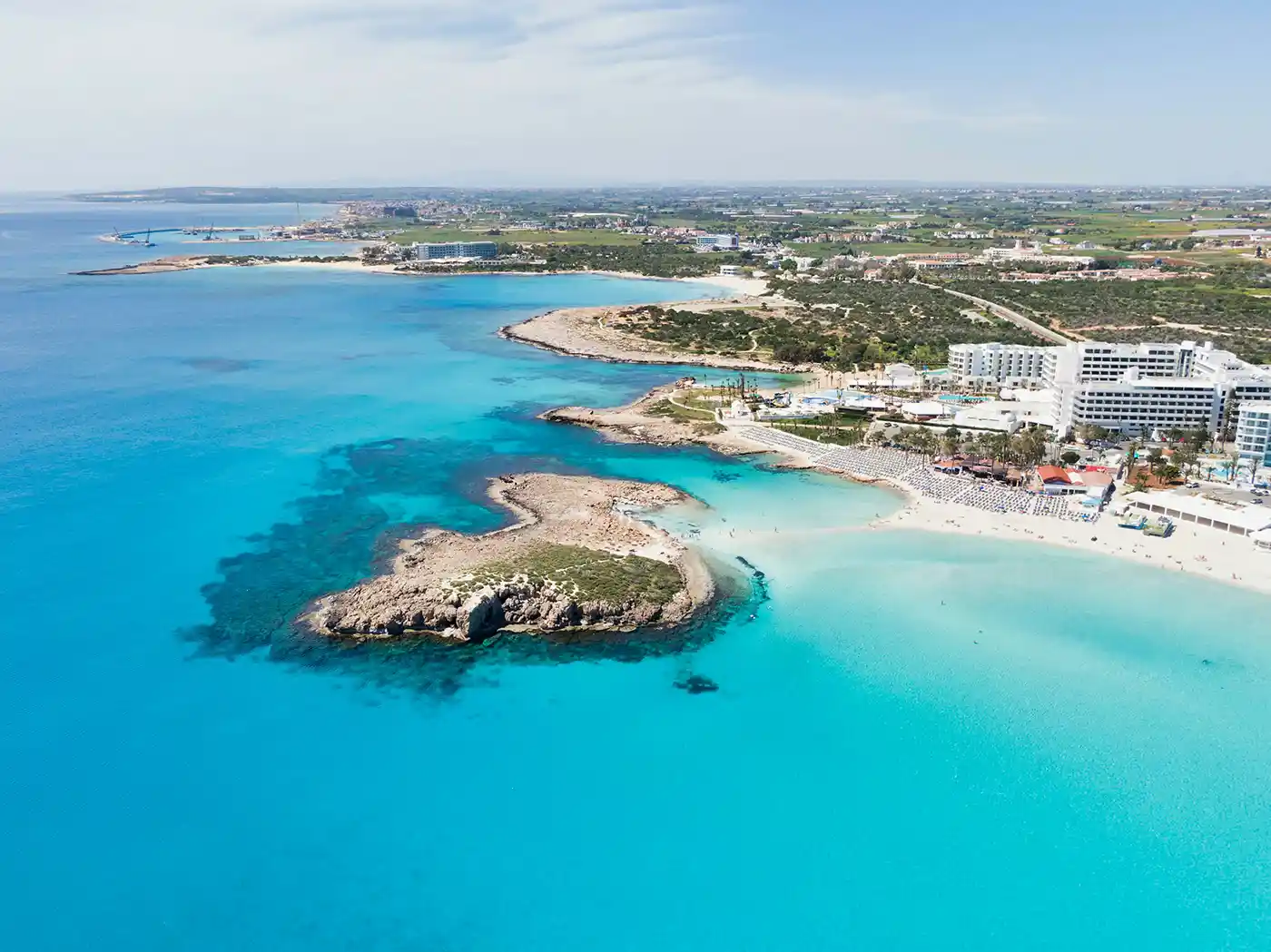
No Cyprus travel guide would be complete without the beaches of the eastern coast. The Ayia Napa–Protaras region (in the Famagusta district) is home to some of the most iconic beaches on the island, often topping best beaches in Europe lists. In Ayia Napa, the crown jewel is Nissi Beach, arguably the most famous beach in Cyprus. Nissi Beach boasts powdery white sand and lagoon-like turquoise waters that draw visitors from around the world. It’s a large, lively beach – by afternoon in peak season it buzzes with music, water sports, and young crowds enjoying the scene. Part of Nissi’s charm is a small islet just offshore: at low tide you can actually walk through shallow water to reach it. The beach’s natural beauty – crystal-clear water and soft sand – is often described as paradise. Despite its popularity and party vibe (with beach bars hosting DJ parties and foam events in summer), Nissi is also simply gorgeous to look at, especially in the mornings when it’s quieter. It’s easy to see why no visit to Ayia Napa is complete without experiencing Nissi Beach.
Heading a bit north, the resort town of Protaras offers a slightly calmer but equally beautiful beach experience. Fig Tree Bay in Protaras is frequently cited as one of the most beautiful beaches in Cyprus. This idyllic bay, named after a solitary fig tree near the shore, features fine golden sand and clear, shallow waters that are perfect for families and snorkelers. Fig Tree Bay has a more laid-back atmosphere than Ayia Napa’s hotspots, and its scenery is stunning – it’s without a doubt one of Cyprus’s prettiest beaches. Just a short distance away lies Konnos Bay, a small cove nestled between Protaras and Ayia Napa in the Cape Greco national park area. Konnos Bay is often called a hidden gem – a sheltered cove with calm, azure waters and lush greenery covering the surrounding cliffs. It’s simply picture-perfect and great for swimming or renting a kayak to explore the coastline. Protaras and Ayia Napa collectively offer an abundance of beach bliss, from lively and famous to tranquil and secluded. Whether you seek energetic beach parties or quiet sunbathing in nature, the eastern coast’s beaches will exceed your expectations.
For more information you can visit Love Ayia Napa
Villages to Explore
Beyond the beaches, Cyprus is known for its abundance of beautiful and intriguing villages tucked into its hills and mountains. Many of these villages lie in cooler elevated areas, making them ideal for exploring in spring or autumn when the weather is mild. Rich in tradition and charm, Cypriot villages offer a glimpse into the island’s culture – think stone-built houses, narrow lanes, historic churches, and local crafts. Here are a few villages that deserve a spot on your itinerary:
Lefkara
Every Cyprus travel guide should include Lefkara, a village famed for its artisans and history. Located in the foothills between Larnaca and Limassol, Pano Lefkara (often just called Lefkara) is a picturesque town of white-stone houses with terracotta roofs and cobbled streets. Lefkara is most renowned for its traditional handmade lace, Lefkaritika, and skilled silverwork. In fact, the village’s lace put it on the world map – according to local legend, Leonardo da Vinci himself visited Lefkara in the late 15th century and purchased an exquisite lace cloth to adorn the altar of Milan’s cathedral. Whether or not the legend is true, the story underscores Lefkara’s legacy as a center of craftsmanship. Strolling through Lefkara, you can pop into tiny shops where local women sit embroidering intricate lace patterns, a craft inscribed on UNESCO’s Intangible Cultural Heritage list. The village also has small museums (like the Museum of Traditional Embroidery) and beautiful churches that showcase its rich past. Lefkara’s blend of cultural heritage and scenic beauty makes it a must-visit – it’s like stepping back in time to an authentic Cypriot village that fiercely preserves its traditions.
Kalopanayiotis
Tucked in the green Marathasa Valley on the northern slopes of Troodos, Kalopanayiotis (also spelled Kalopanagiotis) is another gem to add to this Cyprus travel guide. This mountain village is famous for its thermal sulphur springs and truly embodies agrotourism and wellness. Kalopanayiotis has been a spa retreat since ancient times – even today you can see the sulfur springs by the Setrachos River, known as “Healing Waters,” where kings of old supposedly bathed to restore their health. Beyond the springs, the village is home to the Monastery of Agios Ioannis Lampadistis, a UNESCO World Heritage site featuring multiple Byzantine churches under one roof. These chapels date as far back as the 11th century and are filled with well-preserved frescoes, offering a feast of history and art for visitors. Wander the lanes of Kalopanayiotis and you’ll also find a restored Venetian stone bridge, an old water mill, and traditional houses perched on the hillsides. With its quaint cobbled paths, panoramic valley views, and mix of cultural sights, Kalopanayiotis is often called one of the most beautiful village resorts in Cyprus. It’s the perfect place to experience authentic village life – perhaps staying in a local inn, enjoying the mountain air, and indulging in the village’s spa treatments or nature walks.
Omodos
In the heart of the wine-producing region of Limassol’s Troodos foothills lies Omodos, a charming wine village renowned for its scenic beauty and local produce. At roughly 800 meters elevation, Omodos is surrounded by vineyards and set against a backdrop of rolling mountains. The village itself is postcard-pretty: think cobbled village square, stone-built houses, and vine-draped tavern patios. Omodos has a rich winemaking history – it’s part of the Krasochoria (wine villages) – and is famous for crafting robust red wines and zivania (a traditional grape spirit). Wine lovers can visit local wineries or even an old Linos (wine press) to see how wine was made in ages past. Beyond wine, Omodos is known for its handmade lace and delicacies like arkatena (a traditional bread). A key landmark is the Monastery of Timios Stavros (Holy Cross) located just off the main square, which houses relics and features intricate wood-carved icons. The atmosphere in Omodos is delightfully slow-paced – you can sip coffee in the square while admiring views of the vine-covered hills. If you visit in September, don’t miss the annual festival on the 14th of September, when one of Cyprus’s biggest religious fairs takes place here, celebrating the Holy Cross with festivities in the village square. Omodos truly offers a taste of traditional Cypriot village life, complete with great food, wine, and hospitality.
Platres
Platres is a different kind of village – a historic mountain resort tucked in the Troodos range. Sitting about 1,100 meters above sea level on the southern slopes of Troodos, Platres has been a beloved summer retreat since colonial times. The village is laid out amphitheater-style on the mountainside and is known for its cool climate (a refreshing escape from the coastal heat in summer) and lush nature. Platres is surrounded by pine forests and is famous for its nature trails and waterfalls. In fact, nearby you’ll find one of the highest waterfalls in Cyprus, the Caledonia Waterfall, where icy water cascades down a 20m drop – reaching it via a forest trail is a popular activity. The village itself charms visitors with quaint old hotels and colonial-era buildings, as Platres was a favorite of nobles and poets (even the renowned Greek poet Giorgos Seferis wrote about Platres). Today, Platres offers modern attractions too: there’s a chocolate workshop where you can sample local sweets, and an adventure ropes park that’s fun for families. After hiking or exploring, you can relax at a café in the village plaza or visit the little winery in nearby Kato Platres. With its mix of natural beauty and leisure activities, Platres is an ideal spot for those looking to experience Cyprus’s mountains – you can hike in the morning, then enjoy a cool drink under the plane trees in the afternoon.
Kakopetria
Another Troodos mountain treasure is Kakopetria, located in the Solea Valley of the Nicosia district. Kakopetria is a popular summer resort village thanks to its shady pine forest setting and charming character. The name Kakopetria means “bad rock” in Greek (after a local legend), but the village is anything but bad – it’s absolutely beautiful. The Karkotis River runs through Kakopetria, keeping the valley green and cool. One of the highlights is the old quarter of Kakopetria, a neighborhood of narrow stone-paved alleys and two-story traditional houses with wooden balconies overhanging the lanes. This entire old town area has been preserved and protected for its cultural value, and walking through it feels like entering a storybook. You’ll find quaint inns, a restored watermill, and museums (including a Linos museum showcasing wine and bread-making tools, and an old olive mill). Culture buffs will appreciate that just outside the village (about 5 km away) is Agios Nikolaos tis Stegis (St. Nicholas of the Roof), a 11th-century Byzantine church with remarkable frescoes that earned it a UNESCO World Heritage status. In the village center, the Church of the Transfiguration is also worth a visit. Kakopetria offers plenty of authentic Cypriot charm – from traditional tavernas serving hearty local cuisine to nature trails along the river. It’s an ideal spot to experience village life, enjoy cooler weather, and explore some of Cyprus’s medieval heritage all at once.
Troodos Mountains: Year-Round Adventures
Towering in the middle of the island, the Troodos Mountains showcase a completely different side of Cyprus beyond its beaches. Troodos is the largest mountain range in Cyprus, covering roughly a third of the island’s area. Its highest peak, Mount Olympus (Chionistra), rises to 1,952 meters, and around it lie forests, valleys, and dozens of scenic villages. What’s amazing about Troodos is that it’s a destination for all seasons – a cool green escape in the summer and a snowy playground in winter.
Summer in Troodos: When the coast sizzles with high temperatures, Troodos offers a refreshing respite. Even at the height of summer, the mountain air stays cooler, scented by pine trees and wildflowers. The Troodos region is laced with nature trails – in fact, there are 22 official hiking trails crisscrossing the mountains. These trails lead you through shaded forests, past waterfalls and panoramic viewpoints, showcasing landscapes that range from rocky crags to gentle orchards. Popular hikes include the Artemis Trail near the summit and the Caledonia Trail near Platres. Troodos is also dotted with picnic sites and campgrounds, perfect for a family day out in nature. Adventure seekers can go mountain biking or rock climbing, while culture enthusiasts can explore the region’s many UNESCO-listed painted churches (tiny Byzantine chapels known for their frescoes). Villages like Platres, Omodos, Kakopetria (mentioned above) and others such as Lania or Pedoulas provide charming bases to stay, each with its own character. Troodos has a rich history too – this area was known for its copper mines in antiquity, and you can find cultural heritage sites like the Troodos Geopark which highlights the region’s unique geology. In short, summer in Troodos is all about nature, relaxation, and exploration without the crowds and heat of the coast.
Winter in Troodos: Yes, Cyprus has ski slopes! In the cooler months (typically late December through March), the peaks of Troodos often get covered in snow. Mount Olympus hosts a small ski resort – with a handful of ski runs and lifts – that usually operates from January to March. It’s a surreal experience to ski or snowboard in the morning and potentially be back at a beach by afternoon. The idea of skiing in Cyprus might surprise first-time visitors, but it’s a beloved winter activity for locals when snow hits the mountains. Even if you’re not into skiing, a winter trip to Troodos is magical: pine forests under snow, cozy fireplaces in mountain lodges, and even the chance to make a snowman under the Mediterranean sun. Popular spots like Troodos Square and the nearby Cyprus Ski Club slopes become gathering points for winter fun. The roads to Troodos are kept open (weather permitting), so visitors can drive up to see snowcapped scenery and enjoy a hearty Cypriot meal in a mountainside tavern. One moment you could be sipping hot cocoa by a log fire, and just a short drive away, down in the plains, fields of wildflowers might already be blooming – such is the contrast that Cyprus offers. Winter in Troodos truly lets you see Cyprus in a new light, proving that this island’s allure goes well beyond summertime. Year-round, Troodos is the island’s adventure playground, offering hiking, cycling, cultural tours, and winter sports all in one region.
In Summary
In summary, Cyprus offers a bit of everything – sea, mountains, culture, and food – all wrapped up in one delightful island. In a single day, you could be sunbathing on a golden beach in the morning, visiting a quaint village in the afternoon, and enjoying a cool evening in the mountains. This diverse range of experiences is what makes Cyprus so special. The island’s clear seas and sandy beaches will satisfy any sun-seeker, while its rugged Troodos Mountains and charming villages showcase a rich heritage and natural beauty that reward the curious explorer. History buffs can admire ancient ruins and Byzantine churches, foodies can indulge in fresh Mediterranean cuisine (don’t leave without trying halloumi cheese and mezé platters!), and those seeking community and lifestyle will find the Cypriot people warm and welcoming.
Whether you come to Cyprus for a vacation or decide you never want to leave, the island has a way of capturing hearts. In fact, many visitors do fall in love with the relaxed Mediterranean lifestyle and consider making Cyprus their home. If you’ve been enchanted by what you’ve seen – the turquoise shores, the olive groves, the vibrant city promenades of Larnaca – imagine living here! This is where Sunshadow Investments can help turn that dream into reality. Our company is proud to develop and offer exceptional real estate projects in Cyprus, particularly in the thriving coastal city of Larnaca. From modern seaside residences to cozy village-style homes, Sunshadow’s projects provide an opportunity to not just visit, but live in Larnaca, Cyprus, and be a part of this dynamic community. After all, Cyprus isn’t just a place to explore – it’s a place to invest in your future and enjoy life to the fullest. We hope this guide has given you a taste of Cyprus’s treasures and inspired you to experience the island’s unmatched blend of sun, adventure, and opportunity for yourself. Safe travels and maybe even welcome home!
If you have any questions regarding Cyprus Real Estate investment and development, don’t hesitate to contact us at info@sunshadowinvest.com, call us at +357 24 816246, or Book a 20-Minutes Online Meeting.